
Last updated November 25, 2026
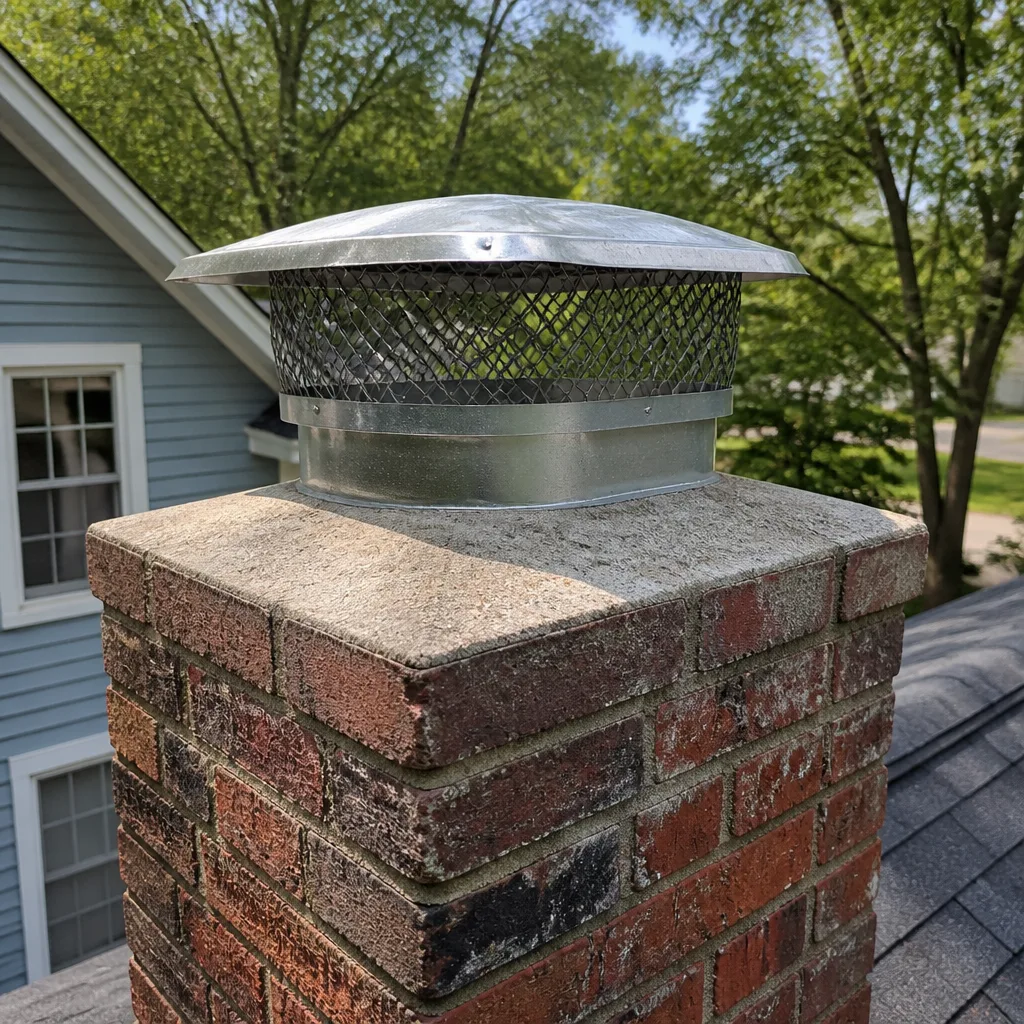 Sweep & inspection
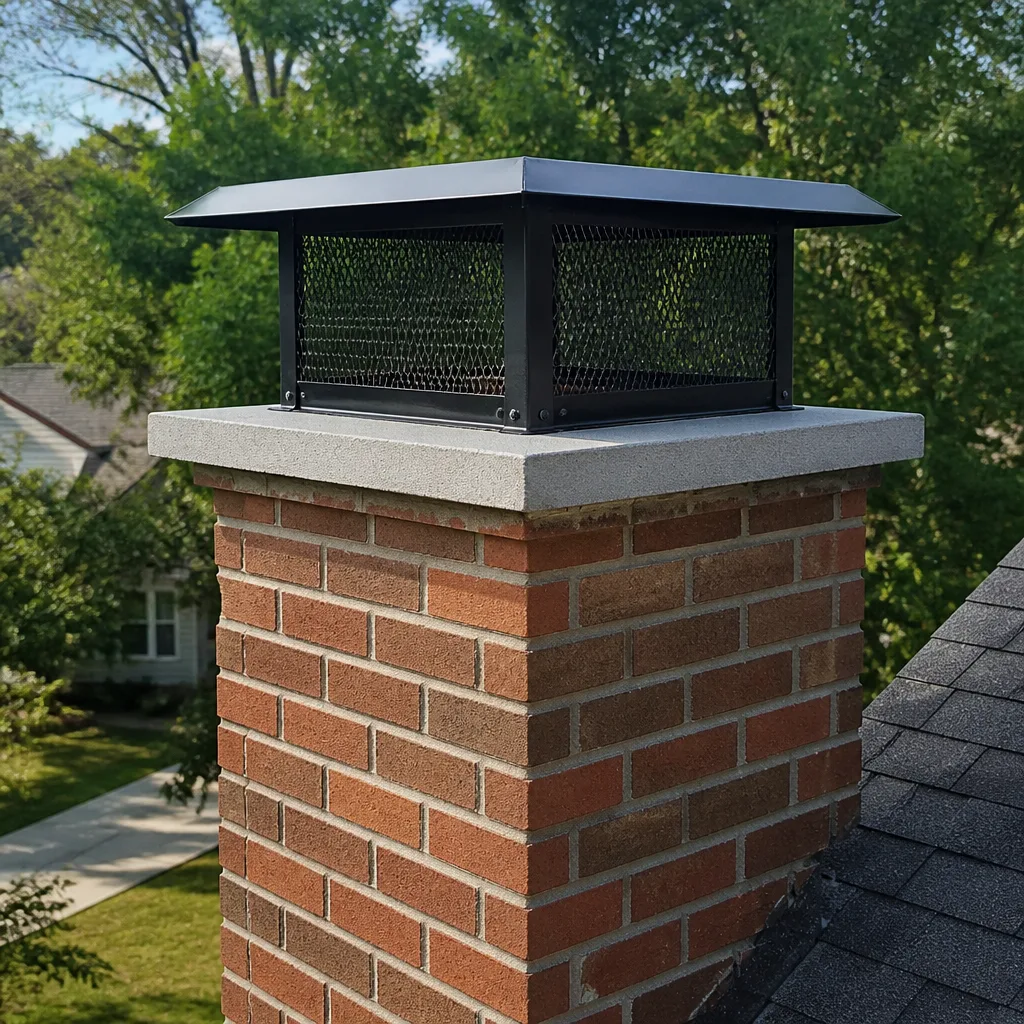 Caps & crowns
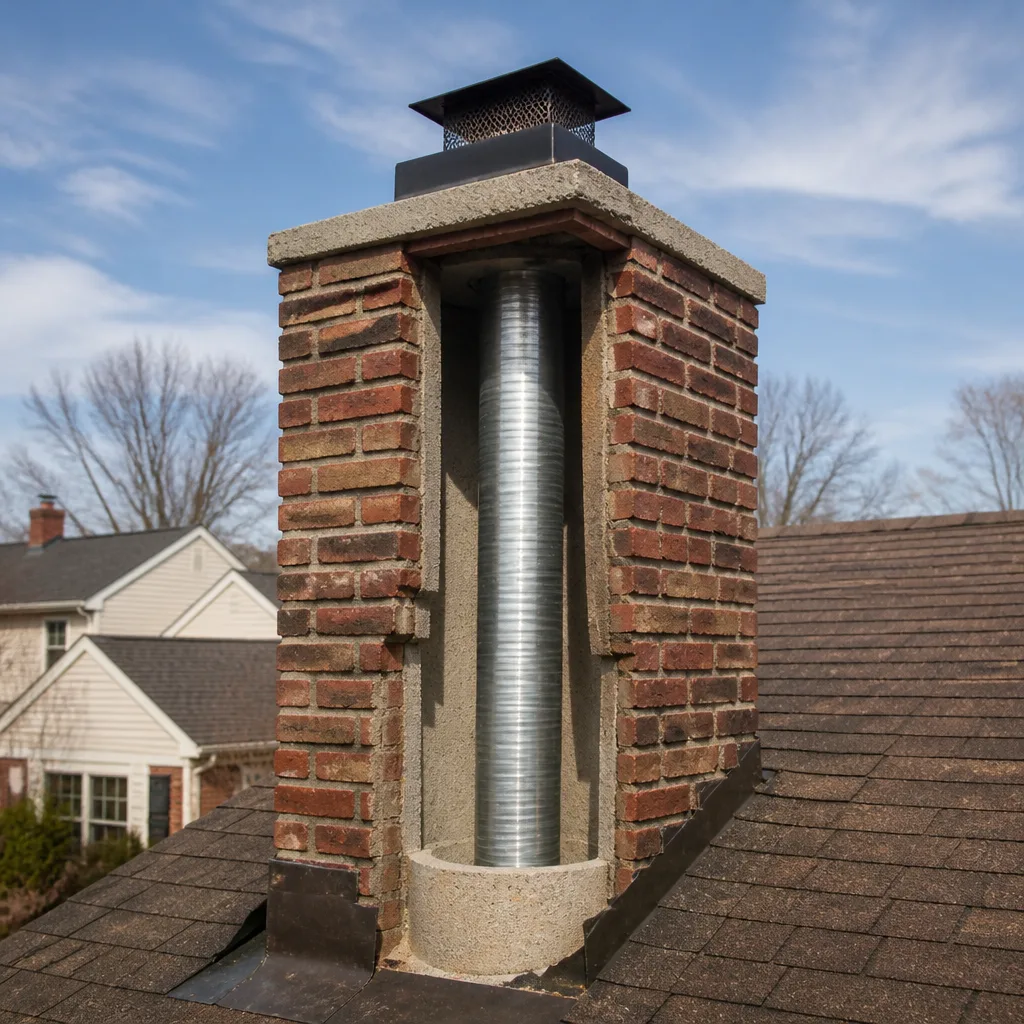 Flue relining
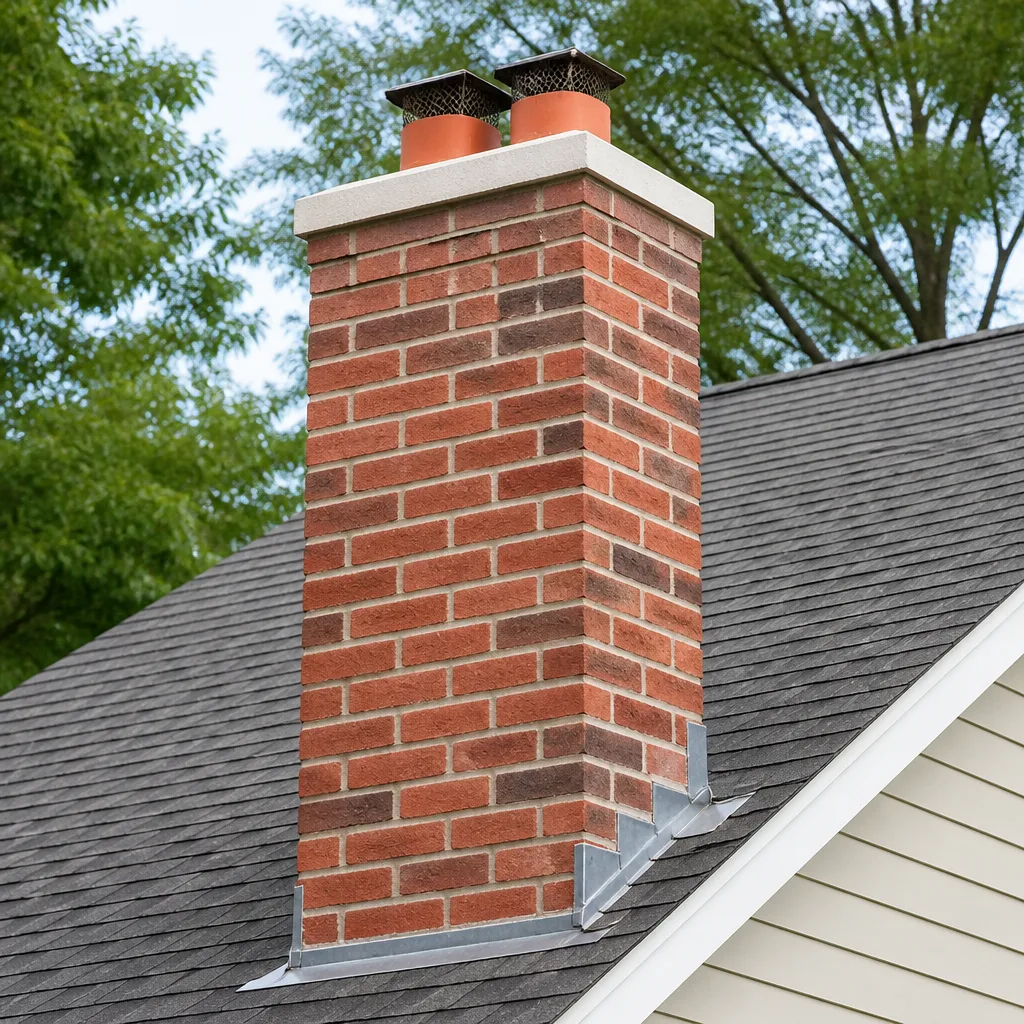 Masonry repair
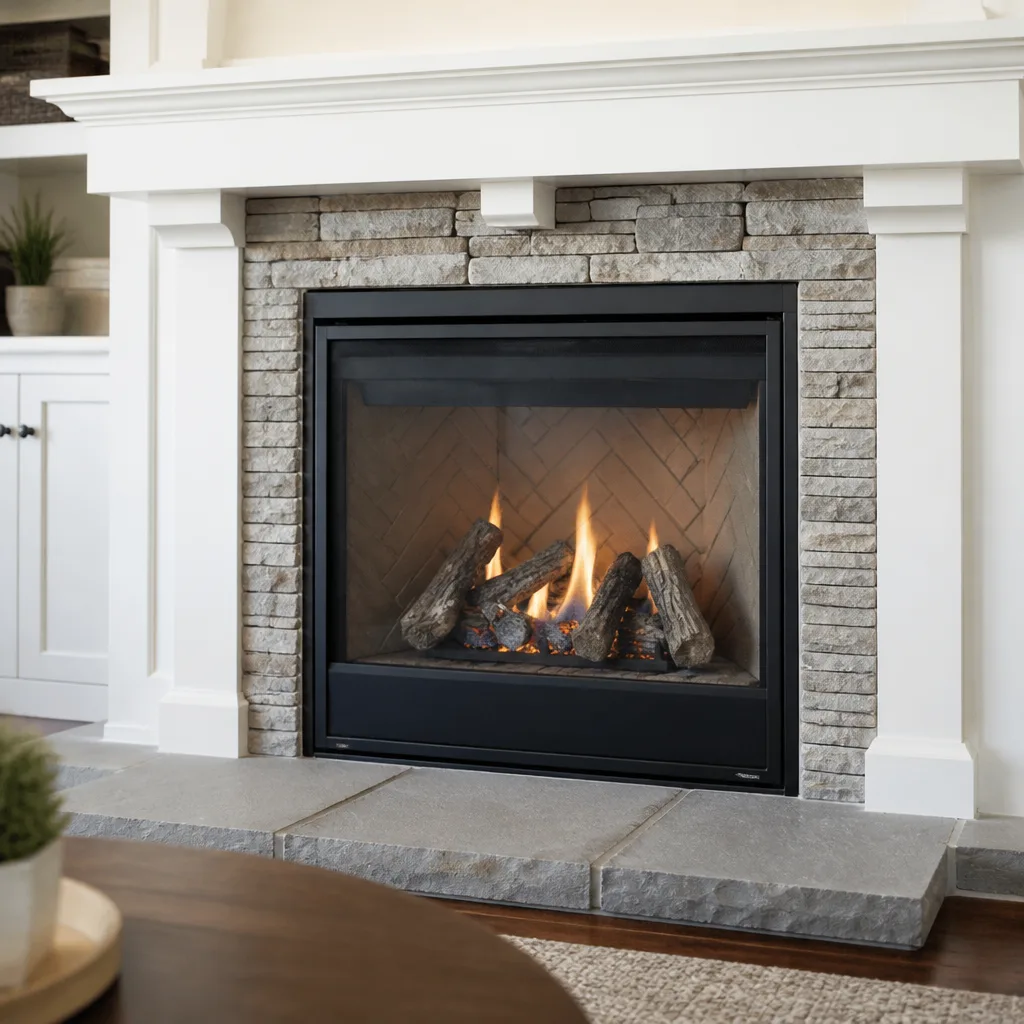 Gas fireplace service
Level 1 sweep and inspection to the NFPA 211 annual standard - flue, crown, cap, and flashing checked and photographed
Chimney sweep logs do not sweep chimneys. They loosen some creosote - which then falls where a brush and vacuum still have to collect it.
Chimney Sweep Maintenance Checklist for Knoxville Homeowners
The chimney cap you can check from the ground with a pair of binoculars. The liner you cannot – and confusing the two is how a small problem turns into a repair that runs into the thousands. Most checklists floating around online blur that line. They either pile on scary warnings about things you can’t see or do, or they hand you a false sense of confidence about the parts of the system that actually fail first. This guide draws the line clearly. You’ll get a homeowner checklist organized by what you can see yourself, what needs a technician, and what’s specific to Knoxville’s freeze-thaw winters.
Quick Answer
A homeowner chimney maintenance checklist should cover four visible zones you check yourself (roofline, firebox, damper, exterior masonry) and three things a trained technician handles (the flue interior, the liner, and a camera-based inspection). The chimney gets a professional sweep and inspection every year for wood-burning fireplaces, gas units get inspected on the manufacturer’s schedule, and you document your own visible checkpoints with photos each season so nothing gets missed between visits.
Table of Contents
- What You Can Actually Check Yourself (and What Normal Looks Like)
- What You Cannot Check, and Why the Liner Matters
- Knoxville Conditions That Show Up in Your Chimney
- How Often Each Part Needs Attention
- Documenting Your Chimney Year Over Year
- Three Checklist Items That Don’t Apply to Gas Inserts
- Common Mistakes to Avoid
- When to Call a Professional
What You Can Actually Check Yourself (and What Normal Looks Like)
You don’t need to climb anything. Everything in this section is visible from the ground or from inside the house, and each checkpoint has a “normal” state so you know when something is off. Start here every fall, right before the first fire of the season.
The Roofline (from the ground)
- The chimney cap: There should be a cap on top of the flue. It’s a metal or mesh cover that keeps rain, birds, and squirrels out. If it’s missing, rusted through, or knocked loose, that’s a real problem, not a cosmetic one.
- The crown (the concrete slab on top): Look for a smooth surface that slopes away from the flue. A crown with a visible crack, a chunk chipped off, or a rough edge is letting water into the masonry.
- The flue exit: From a safe angle, look for anything nesting in the opening. Birds and squirrels are the seasonal culprits.
- Vegetation on the chase: Ivy, vines, or a tree limb touching the chimney chase is a real flag. Plants hold moisture against masonry and their roots work into seams.
The Firebox
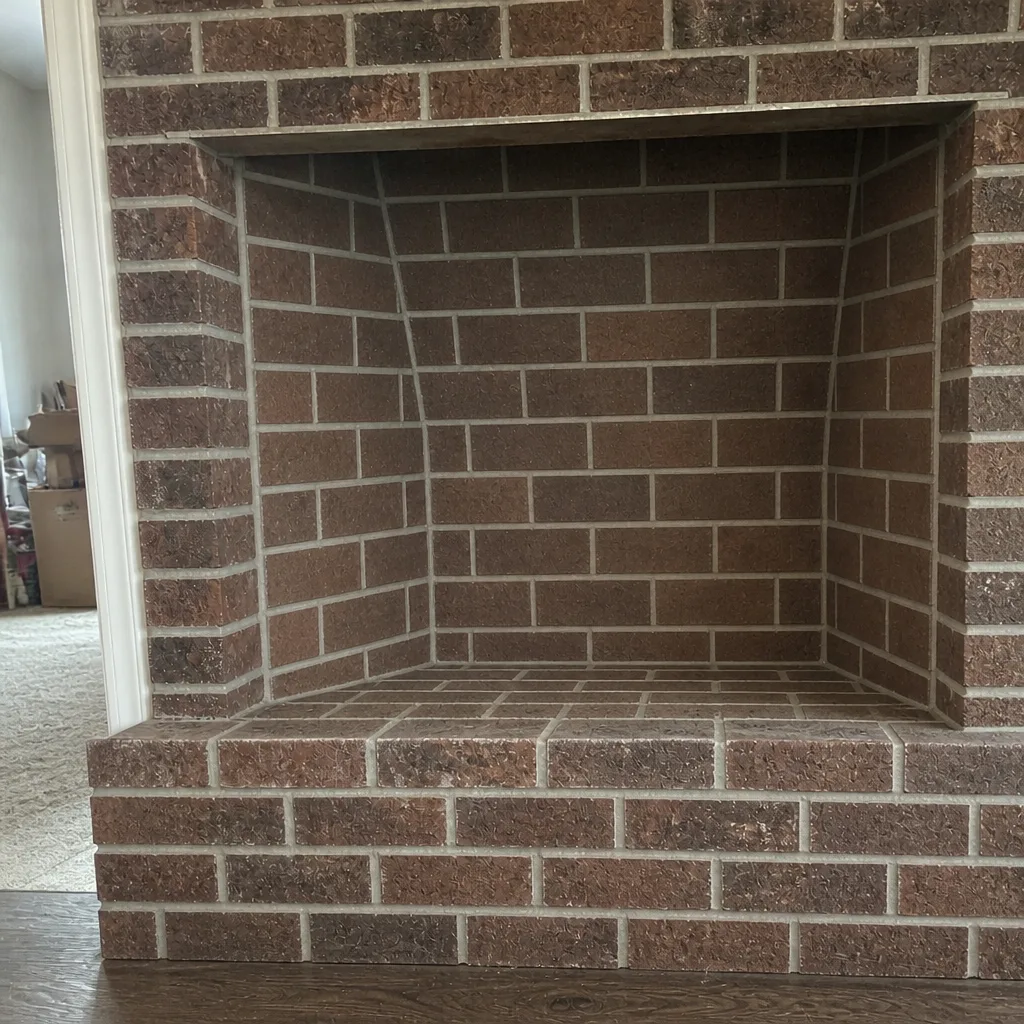
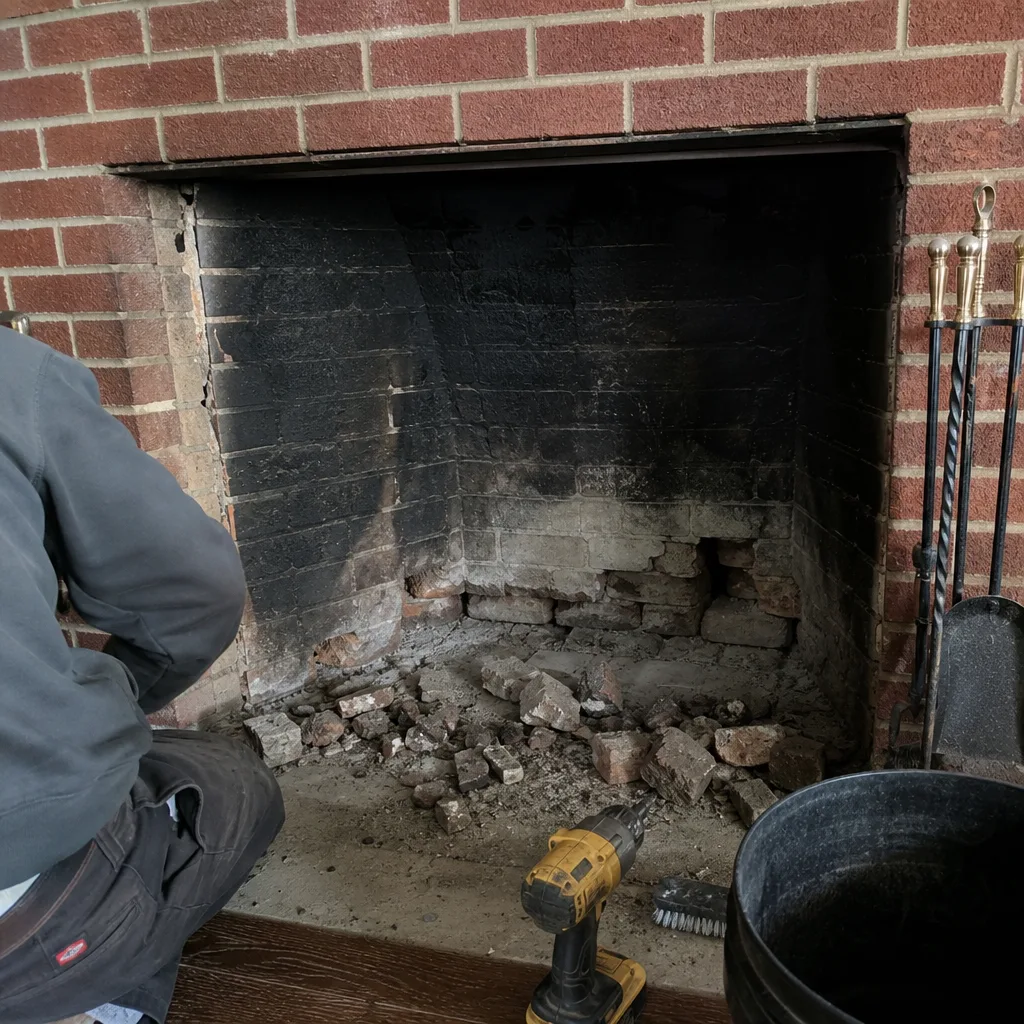
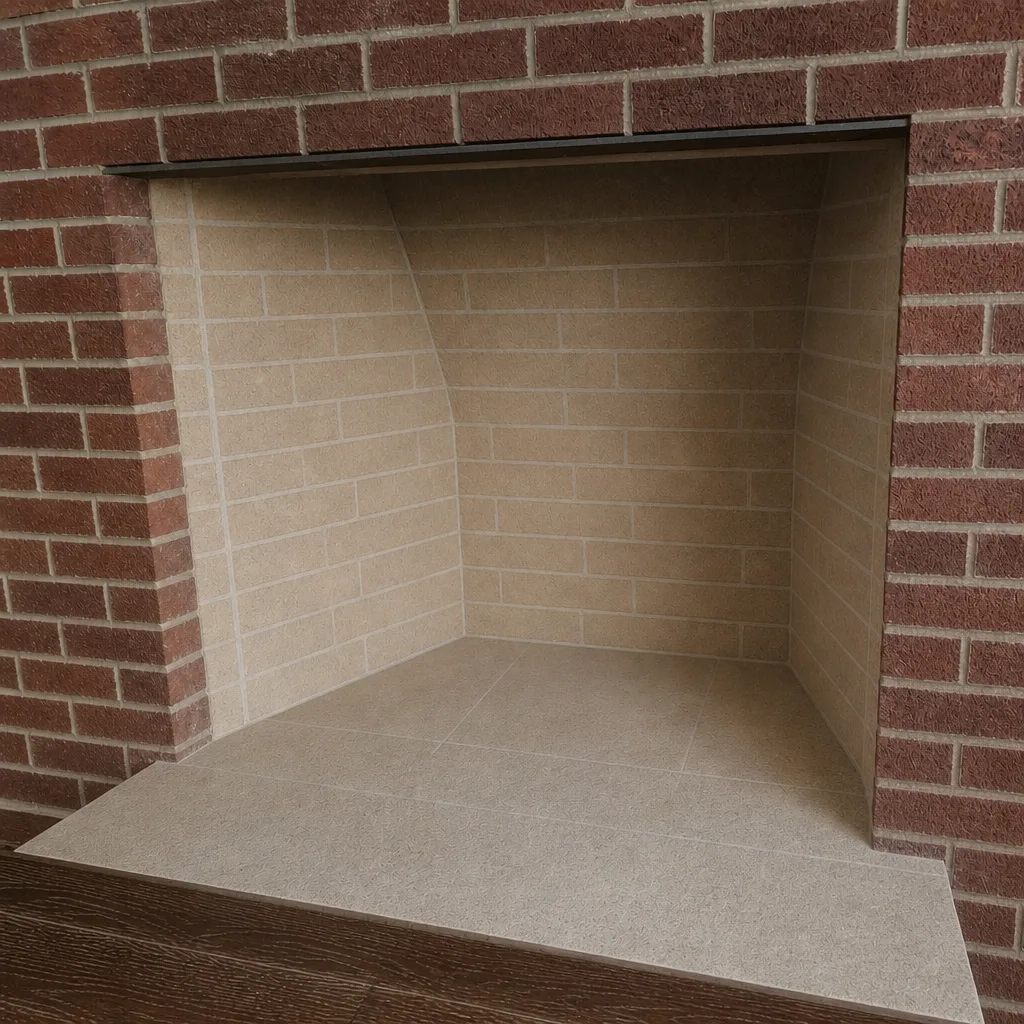
Inside the fireplace opening, normal is a clean firebox with intact brick and a tight brick joint. What you’re checking for: cracked firebrick, crumbling mortar between the bricks, or a firebox that looks blackened and flaky beyond the usual soot. Any gap in the firebox lets heat reach framing or masonry in a way it shouldn’t.
The Damper
The damper is the metal door above the firebox that opens and closes. It should move freely. It should sit flush and closed when you push it shut. A damper that sticks, hangs at an angle, or won’t seal is a draft and heat-loss problem and a sign of wear.
Exterior Masonry
Walk around the outside of the house and look at the chimney from the ground. Normal is brick with tight joints between them. Flag mortar that is crumbling, dropping out, or showing a white powder residue. That white staining is the single most useful thing you can look for in Knoxville. Keep reading.
What You Cannot Check, and Why the Liner Matters
Now the honest part. The flue interior, the liner, and the condition of the smoke chamber above the damper are the components that decide whether your chimney is safe, and none of those are visible from any angle you can safely reach. The reason is simple: the liner is a pipe inside the chimney that carries exhaust and heat up and out. When it degrades, you can’t see it, but heat and carbon monoxide can. That’s the part you cannot do yourself.
What a technician actually examines
- The full length of the flue, with a camera on an inspection run, looking for gaps, cracks, breakdown at joints, and heavy creosote buildup.
- The smoke chamber and the area just above the damper, where turbulence can drive heat toward masonry.
- The liner’s material and its fit – a clay tile liner, a stainless liner, or a ceramic-coated system all wear and fail in different ways.
- The exterior and cap from a safe position, cross-checking what you saw from the ground.
- A photo record of what the camera sees, so you can look at the evidence instead of taking a diagnosis on faith.
Why professional-grade materials matter here
When a liner does need work, the material choice matters. We install and work with liner systems from DuraFlex, and for ceramic resurfacing of an existing liner we use HeatShield, a professional ceramic system built for that application. That last point is worth understanding: a full reline isn’t the only answer to a degraded liner. Sometimes the liner can be restored, and that decision comes down to what the camera shows. Trade-grade components from brands like DuraFlex, HeatShield, Olympia Chimney, Copperfield, and Famco exist because a chimney is a system, and the parts are rated to handle the heat and corrosion the flue actually sees. Hardware-store substitutes aren’t built for it.
The safety line
Creosote, the residue left by wood smoke, can accumulate in the flue and ignite. That’s what a chimney fire is, and it can damage the liner in ways you cannot see. Carbon monoxide is the other risk, and it’s why a blocked or damaged flue is a serious condition. This is not a scare tactic – it’s the reason a professional inspection is on the list. The good news is that a straightforward annual Knoxville Chimney Sweep Pros visit catches these problems while they’re small, before they become structural.
Knoxville Conditions That Show Up in Your Chimney
Knoxville sits in a climate with real winters and warm summers, and the swing between them is what does a lot of the damage. A masonry chimney expands when it freezes and contracts when it thaws, and that cycle repeats through East Tennessee’s winter. That matters for a specific reason: water gets into mortar and brick, freezes, expands, and widens the gap. Over seasons, joints open up, which lets more water in, which repeats the cycle. Left alone, a chimney that just needed repointing can develop cracks in the flue and structural problems that need much bigger work.
Three Knoxville-specific things to watch
- White efflorescence after winter: That white, powdery staining on exterior brick is salt pushed to the surface by moisture moving through the masonry. It’s not the damage itself, but it’s a reliable sign that water is getting into your chimney. If you see it after a Knoxville winter, get the chimney checked.
- Mortar joint separation from freeze-thaw: Look at the vertical and horizontal joints on the exterior. Crumbling, sandy joints that have widened since last year are the freeze-thaw cycle at work.
- Vegetation encroaching on the chase: East Tennessee’s growing season means vines and ivy move fast. Anything growing on the chimney chase should be cut back, because it traps moisture and its roots work into the same seams the freeze-thaw cycle is already opening.
What this means for your checklist
Spring and fall are the two inspection points in Knoxville because they bracket the freeze-thaw season. Check the exterior masonry in spring, after winter has done its work, and again in fall before you start burning. The white staining and the loosened joints show up in the spring check. The nesting birds and the loose cap show up in the fall check.
How Often Each Part Needs Attention
Not every item on your checklist runs on the same clock. A chimney sweep and inspection happens annually for a wood-burning fireplace. The larger structural pieces are checked less often, storm-dependent, or fire-dependent. Here’s how to think about the schedule.
Annually
- Professional sweep and inspection: Once a year for a wood-burning fireplace. If you burn often, hard, or burn unseasoned wood, schedule the chimney sweep and inspection more often. Any time you’ve had a chimney fire, always get an inspection before burning again.
- Your own visible checkpoints: Roofline, firebox, damper, and exterior masonry, done each spring and fall.
- Damper operation: Confirm it opens and closes smoothly each fall. Note any change from last year.
- Cap condition: Check the cap is intact and secure each fall. It’s the front line against water and animals.
Every three years (or on the manufacturer’s schedule for gas)
- Deeper inspection for a chimney that is checked and cleaned annually with no problems. A technician may suggest a more detailed inspection on a longer cycle if your history is clean.
- Gas fireplace inspection: Follow the appliance manufacturer’s guidance for inspection frequency, and don’t skip the annual safety check on a gas unit.
Only after a specific event
- After a chimney fire: Full inspection, no exceptions. Damage from a chimney fire is often invisible from inside your house.
- After a severe storm: Check the cap, the crown, and the exterior for shifted or loosened pieces, and get the chimney looked at if anything looks disturbed.
- After a chimney cap or crown repair: A follow-up check to confirm the new material is holding and no water is getting behind it.
We’ve seen this schedule work in our experience across Knoxville homes with all kinds of fireplaces and chimneys. A wood-burning system with a clean history still needs the annual visit, because the annual visit is what keeps the history clean.
Documenting Your Chimney Year Over Year
The single best thing you can do to get better service is to keep a photo record. Every technician can compare photos. Without them, you’re relying on memory, and memory is unreliable year to year. Here’s a simple process.
How to build the record
- Take the same photos every season. Same spot, same angle, same time of year. The exterior from the ground, the firebox, the damper, the cap from a safe viewpoint. The consistency is what makes comparison meaningful.
- Label each photo. Note the season, and the checkpoint it shows. A photo tag on your phone works fine.
- Use a photo mailbox for the next technician. Keep your photo record with your chimney paperwork, so the technician can compare your current photos against the earlier ones without you having to recreate the shots.
- Save the technician’s photo report too. When your inspector hands you a camera report, keep those photos with yours. Next year’s visit starts from a full record instead of from a clean slate.
Why this changes the conversation
When you have photos from last season, you can see the difference between a joint that’s unchanged, a joint that’s opened up a little, and one that suddenly shows a crack. That’s the difference between “you might need work” and “here’s what’s actually changed this year.” The report a technician gives you should be built on what the camera sees, with photos you can review yourself. If a repair is recommended and you can’t see why in the photos, ask.
Three Checklist Items That Don’t Apply to Gas Inserts
A lot of published checklists were written for wood-burning fireplaces and then applied to every fireplace. If you have a gas insert, three of the most common “red flags” don’t apply, and treating them as urgent problems creates a lot of unnecessary worry.
1. “Look for creosote in the flue”
Gas fires don’t produce creosote. Creosote is a byproduct of wood smoke. A gas fireplace venting properly builds very little of anything in the flue. If a checklist tells you creosote is the main thing to check on a gas insert, it wasn’t written with gas inserts in mind.
2. “Make sure the damper is open before you light it”
Many modern gas inserts are vented appliances with their own venting system, and some don’t rely on your fireplace’s damper at all. Gas units should be inspected and the venting checked, but the chore of manually opening a damper before lighting a fire isn’t the safety routine for a sealed gas insert the same way it is for an open wood fireplace. Check the manufacturer’s instructions for your specific appliance.
3. “The firebox needs visible brick inspected for cracks every season”
A gas insert sits inside its own firebox assembly, sealed off from the masonry firebox behind it. Cracks in the original masonry firebox aren’t necessarily in play for a sealed gas insert. What matters more with gas is that the appliance is checked by a technician on the manufacturer’s schedule, and that any venting components – the vent pipe and connections – are in good shape. This is one place where professional venting parts from brands like Gelco and Famco show up, because gas venting components are rated for specific appliance types and need to match.
If you have a gas insert, use the same visible checkpoints for the exterior masonry and the cap, and let a technician handle the appliance and venting. The wood-specific creosote and damper checks don’t belong on your list.
The Safety Checks That Belong on Every List
Whatever fuel your fireplace uses, a few checks are common to any chimney system, and they’re worth doing every season.
Carbon monoxide detection
Any fuel-burning appliance, wood or gas, can produce carbon monoxide. Make sure you have a working CO detector, and check that its test button works. If a detector goes off, get everyone out of the house and treat it as a real event. A blocked, damaged, or improperly vented flue is a genuine reason for CO to build up, and you can’t see it, smell it, or taste it.
Smoke detection and clearance
A smoke detector near the fireplace is basic protection. Keep combustible material off the hearth and away from the fireplace opening. This is a home-safety item, not a chimney item, but it lives on the same checklist because the fireplace is where it matters most.
Draft and backdraft
A fireplace that smokes, puffs, or won’t hold a draft is telling you something is wrong with the system, whether it’s a partial blockage, a cracked flue, or a damper issue. Don’t keep burning through it. Get it inspected.
Common Mistakes to Avoid
- Treating the checklist as a one-time task. A chimney checklist works because it repeats. Do the visible checks every spring and fall. Do the professional visit annually. The value is in the comparison, not in a single pass.
- Cleaning the firebox with a household cleaner and assuming it’s clean. Soot and creosote live in the flue, above the firebox, out of reach. Cleaning the firebox doesn’t clean the chimney, and creosote in the flue is what has to be addressed.
- Skipping the annual inspection because the chimney “looks fine.” “Looked fine from the ground” is how a problem that was small a year ago becomes a bigger job. The liner and flue are exactly what you can’t see. In Knoxville, a winter of freeze-thaw can open a joint you never touched. Get the report.
- Trusting a diagnosis you can’t verify. If someone tells you your liner, flue, or firebox needs work, ask to see the camera photos. A repair should be based on what the camera shows, and you should be able to look at it and see the same thing the technician sees. If you can’t see the evidence, don’t act on it.
- Assuming a sweep is all you need. A cleaning removes buildup. It doesn’t fix a cracked crown, a missing cap, or a liner that’s broken down. If your chimney is showing white staining or loose mortar, the sweep is only the first step. Fixing the water intrusion is what stops the damage. Our chimney cap & crown work addresses the source – a cap and crown that keep water and animals out – which is why we treat them as part of the system, not an afterthought.
- Using a hardware-store substitute for a venting component. Venting parts aren’t universal. Components are rated by appliance type and the conditions they handle, and a mismatch is a real problem. The difference between using a professional-grade part and cutting corners is why we keep professional component brands in the mix.
- Ignoring the “it can wait” question. Not every flagged issue is urgent. Some can safely wait; some can’t. Ask whether a finding can wait until the next season or needs attention now. Any professional who won’t answer that honestly isn’t giving you a real diagnosis.
When to Call a Professional
Call a professional if any of these apply: your annual sweep is due; you’ve had a chimney fire; your fireplace smokes or won’t draft; you see white staining, cracked mortar, or a damaged crown on the outside; your cap is missing or loose; your CO detector has gone off; or you’ve bought a Knoxville home and don’t know the chimney’s history. A trained technician, with camera-based inspection and a photo report, can tell you what’s really happening inside the flue – and can handle the fix, not just the diagnosis. From first inspection to final repair, one call covers the sweep, the inspection, and the repair itself. If your fireplace or chimney needs fireplace repair or structural work, we can fix it with professional-grade materials rather than referring you elsewhere.
Knoxville Chimney Sweep Pros offers free estimates in Knoxville – call (855) 726-7247. We answer 24/7. Fast dispatch from 7am to 7pm, Sunday through Friday.
Frequently Asked Questions
Once a year for a wood-burning fireplace is the baseline, and more often if you burn frequently, burn unseasoned wood, or the flue shows heavy buildup. Schedule it before the first burn of the season so any problem is caught before winter. The rest of the checklist – visible checks, caps, masonry – runs on a spring and fall rhythm around that annual visit. Call (855) 726-7247 for an exact quote – estimates are free.
A professional inspection examines the full flue interior, the liner, the smoke chamber, and the venting, using a camera to see what’s out of reach. It looks for gaps, cracked clay tiliter, degraded or failing liner material, and the condition of joints and connections. That’s the evidence that tells you whether a problem is small, can wait, or needs attention now. Your inspector should show you the camera photos so you can see the same thing. Call (855) 726-7247 to book one.
Not every liner needs to be replaced. A damaged liner can sometimes be restored with a ceramic resurfacing system, which we use for that purpose. Whether restoration is right for your chimney depends entirely on what the camera shows about the extent of the damage. Ask for the photos and the reason. If a full reline is genuinely needed, you should be able to see why. Call (855) 726-7247 for a free estimate.
White staining (efflorescence) is a sign that water is moving through your masonry, not the damage itself. In Knoxville it’s often a spring sighting after winter, and it’s worth taking seriously because water is what opens joints, cracks masonry, and leads to bigger problems. A cap and crown in good condition are the two things that keep water out at the source. Get it checked. Call (855) 726-7247 for a free estimate.
Creosote builds up in the flue, and a chimney fire can ignite it, which is what damages liners and puts your home at risk. A damaged or blocked flue can also allow carbon monoxide into the home. Those are the reasons the annual inspection matters. The good news is that most of the problems a checklist catches are cheaper to fix early than late, and some findings can safely wait. A proper inspection tells you which is which. Call (855) 726-7247 for a free estimate.
A sweep-only company can clean and may flag a problem, but they often can’t fix it, which means a handoff to another contractor. We handle the full lifecycle – sweep, inspection, cap and crown, fireplace repair, and chimney repair – so the same team addresses what the inspection finds. When a repair calls for HeatShield restoration or a DuraFlex liner component, that work stays with the same company. Call (855) 726-7247 for a free estimate.
The Bottom Line
The most useful chimney checklist draws a clear line between what you can see and what a trained professional needs to see for you. Check the roofline, firebox, damper, and exterior masonry yourself, spring and fall, and photograph each checkpoint so you’re comparing this year to last. Then let a professional inspect the flue and liner annually with a camera and show you what they find. In Knoxville, the freeze-thaw cycle means water is your chimney’s main enemy, so treat white staining and loose mortar as early signals, not cosmetic trivia. Gas inserts have a shorter, different list. If you want a free estimate on any of it, call (855) 726-7247.
Written by the team at Knoxville Chimney Sweep Pros.
Styles & brands we work with
- Sweep & inspection
- Caps & crowns
- Flue relining
- Masonry repair
- Gas fireplace service
See the difference
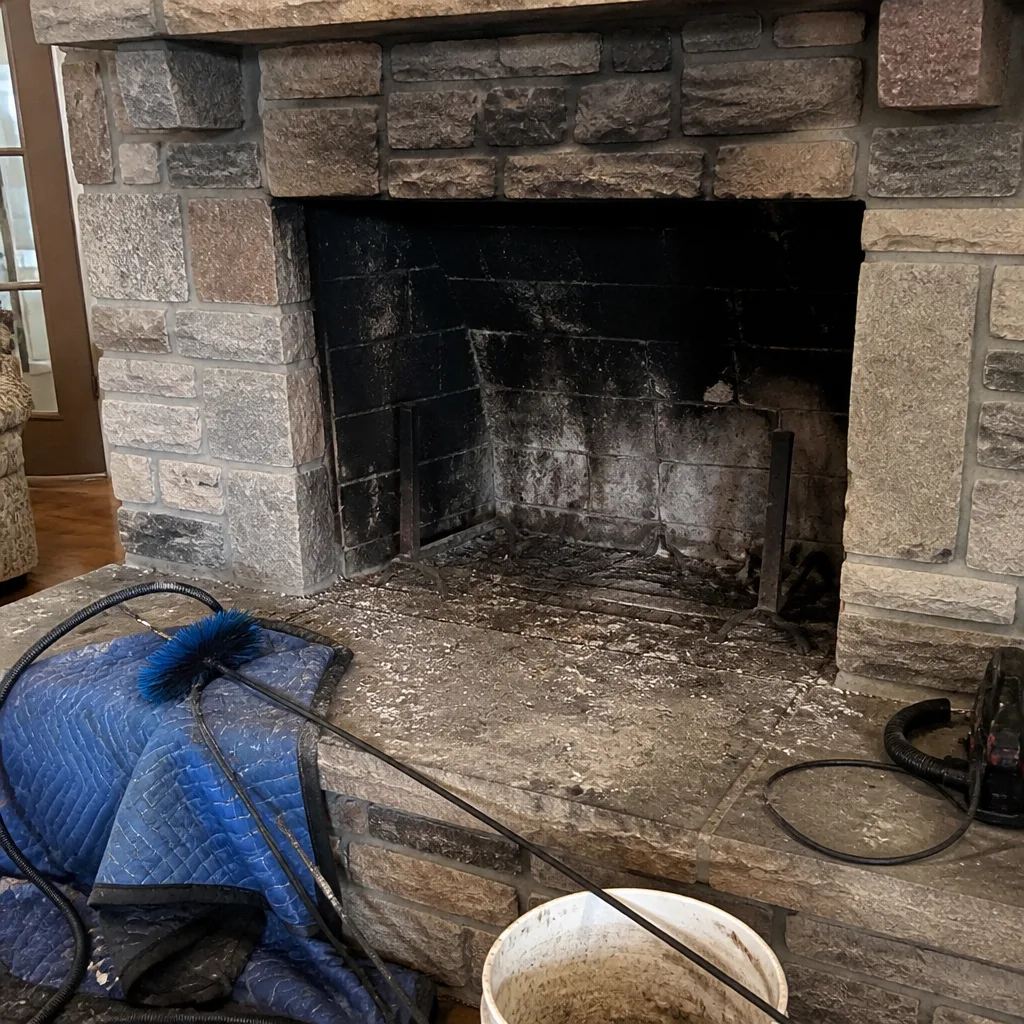 Before
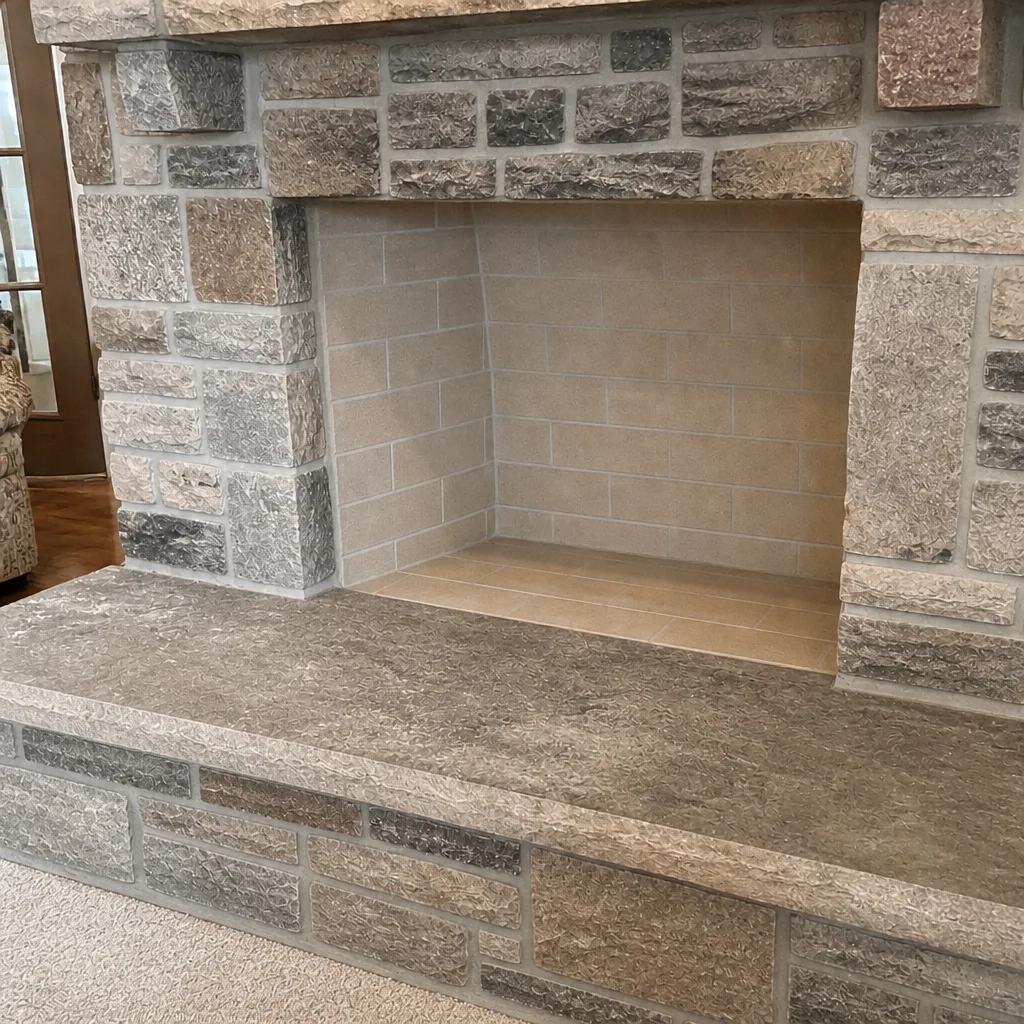 After
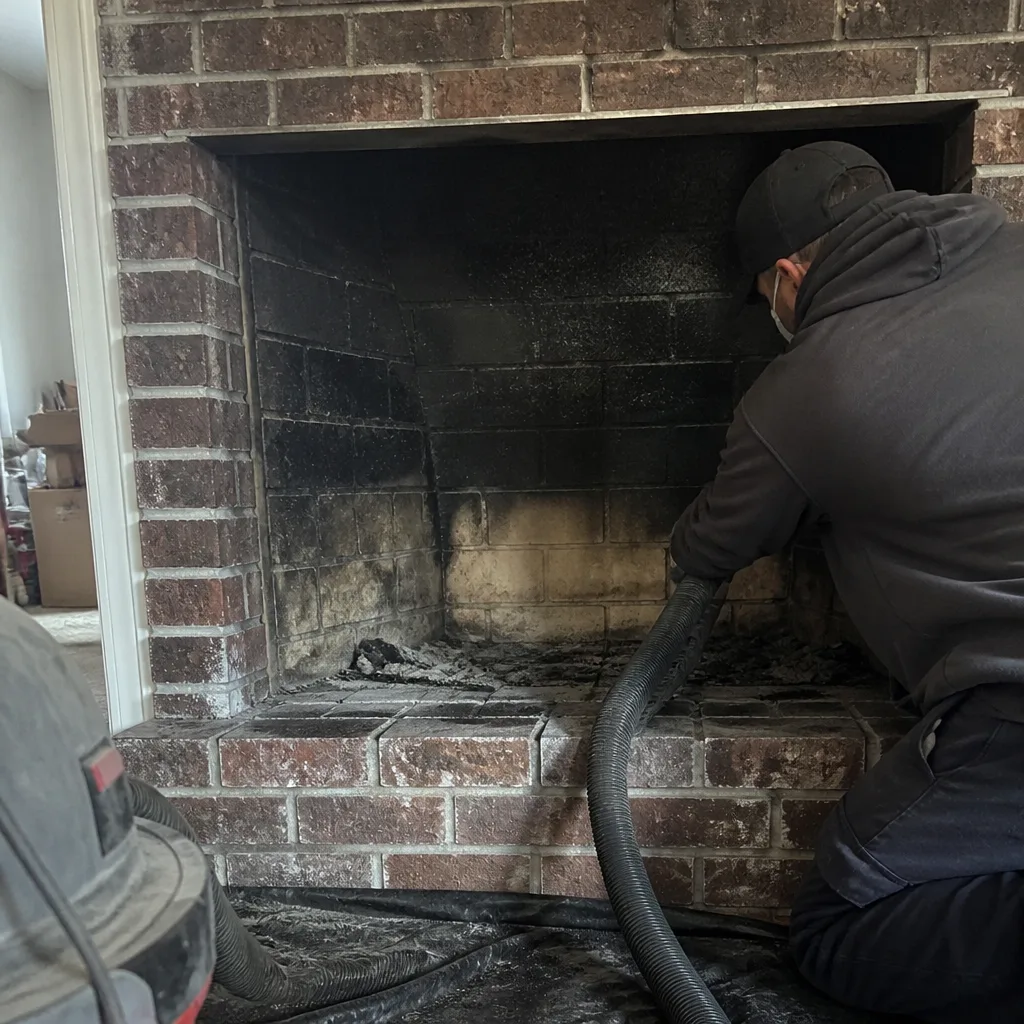 Before
 After
 Before
 After